Understand Programmatic SEO and Its Importance

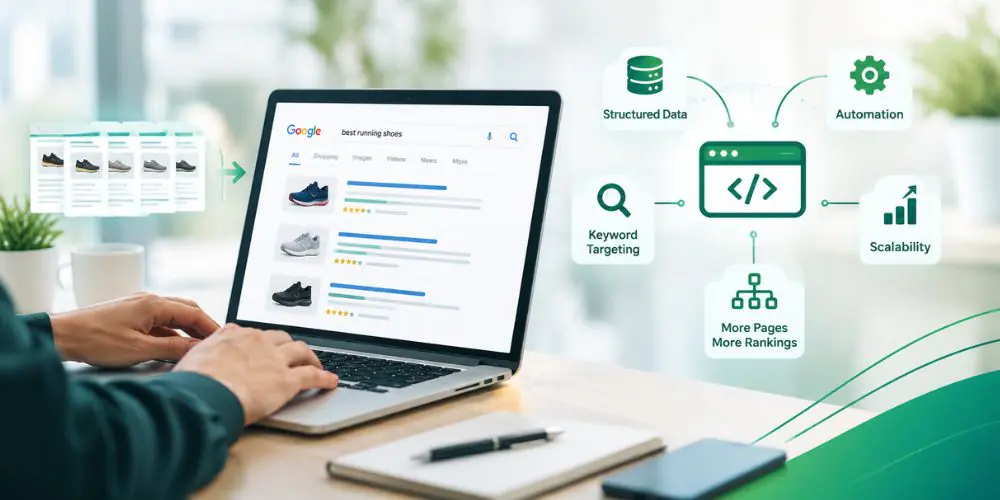
Search engine optimisation can become difficult to manage when a website needs to target hundreds or thousands of related search queries. Creating every page manually takes time, especially when those pages follow a similar structure. This is where programmatic SEO can help. Programmatic SEO uses templates, structured data and automation to create large numbers of search-focused pages. Instead of building every page from scratch, you create a flexible system that can produce relevant pages based on different products, locations, services or other data. But creating more pages does not automatically mean getting more organic traffic. Each page still needs to provide something useful to the person searching.

What is Programmatic SEO?

Programmatic SEO is an approach to SEO that uses automation and structured data to create multiple pages targeting related search queries. For example, imagine a travel website targeting searches for hotels in different cities. Rather than manually creating separate pages for every location, the website can use a page template connected to a database. The template could automatically add information such as:
  • Destination name
  • Available hotels
  • Prices
  • Ratings
  • Local attractions
  • Images
  • Useful travel information
The same basic structure can then be used for many different locations while the information on each page changes according to the destination. The goal is not simply to create thousands of URLs. The goal is to create useful pages that match specific searches at scale.

How Does Programmatic SEO Work?

Programmatic SEO starts by finding a group of related searches that follow a similar pattern. You can then use structured data and a page template to create pages that target those searches at scale. For example, a travel website might target: Hotels in London Here, London is the variable. It could be replaced with different cities, regions or countries. Once the pattern is identified, the website can use its database to automatically add the relevant information for each location. The process can be broken down into five simple steps:

1. Find a Search Pattern

Identify related searches with a repeatable structure, such as “Hotels in London”.

2. Collect Structured Data

Gather the information needed for each page, such as hotel names, prices, ratings, locations and other relevant details.

3. Create a Page Template

Build a template that can use this data to create consistent page layouts.

4. Generate the Pages

Use the template and database to create multiple pages based on different locations or other variables.

5. Optimise and Monitor

Check each page for search intent, content quality, internal links, indexing and performance. The important point is that programmatic SEO should not mean creating identical pages with only a keyword or location changed. Each page should contain relevant information and useful features that match what people are actually searching for.

Programmatic SEO vs Traditional SEO

Programmatic SEO and traditional SEO have the same overall goal, helping relevant pages appear in search results. The main difference is how those pages are created and scaled. Traditional SEO usually involves creating and optimising pages individually. This works well when each topic needs detailed research, original insights or a different content structure. Programmatic SEO is more useful when you have a large number of similar pages that can be created from structured information. For example, a website may have hundreds of products, locations, properties or job listings. Building each page manually may take considerable time, while a properly designed system can handle repetitive elements automatically. This does not mean programmatic SEO replaces traditional SEO. Many successful websites use both approaches.

Why is Programmatic SEO Important?

The biggest advantage of programmatic SEO is scale. A website with thousands of relevant search opportunities may not have the resources to create every page manually. Automation can reduce repetitive work and make it easier to expand organic search coverage. It can also help businesses:
  • Target more specific search queries
  • Create location or product pages at scale
  • Make better use of structured data
  • Keep similar pages consistent
  • Reduce repetitive manual work
  • Expand into new search opportunities
However, scale should come after quality. Creating 10,000 weak pages is unlikely to be more useful than creating 500 strong pages that properly answer what people are searching for.

Examples of Programmatic SEO

Programmatic SEO can work across many industries where websites have large amounts of structured information.

Travel Websites

Travel websites are a natural fit because people search for destinations, hotels, attractions, restaurants and activities in many different combinations. A website could create pages such as:
  • Hotels in Manchester
  • Things to do in Edinburgh
  • Family hotels in Barcelona
  • Weekend breaks in Amsterdam
Each page can use destination-specific information, listings, prices, reviews and other useful details.

Ecommerce Websites

Ecommerce websites can use programmatic SEO to create pages around products, categories, brands, sizes, colours and other attributes. For example:
  • Running shoes for men
  • Black leather handbags
  • Size 10 football boots
  • Waterproof hiking jackets
The pages can be generated using product catalogue data while keeping the structure consistent. The important part is making sure these pages provide genuine value. If hundreds of pages contain almost the same products and information, there may be little reason for users or search engines to treat them as separate useful resources.

Real Estate Websites

Property websites often have large amounts of structured data, making them suitable for programmatic SEO. Pages could target searches such as:
  • Houses for sale in Birmingham
  • Flats to rent in Leeds
  • Two-bedroom homes in Bristol
  • Apartments for sale in a specific postcode
Property listings, prices, locations, property types and other local information can be used to create pages that match these searches.

Job Boards

Job websites can create pages based on job titles, locations, industries and employment types. Examples include:
  • Marketing jobs in London
  • Remote SEO jobs
  • Software developer jobs in Manchester
  • Part-time retail jobs in Birmingham
The page can automatically update as new jobs are added or old listings expire.

How to Build a Programmatic SEO Strategy

Programmatic SEO needs more planning than simply generating pages from a spreadsheet. A strong strategy should cover the following steps.

1. Find Scalable Search Opportunities

Start by looking for search queries that follow a clear pattern. You might find opportunities around:
  • Locations
  • Products
  • Services
  • Categories
  • Job titles
  • Property types
  • Product attributes
Look for groups of searches where users have similar needs but the specific details change. For example, “SEO agency in the UK” follows a clear pattern, but that does not mean every possible city deserves a page. You still need to check search demand, competition and whether your business can offer useful information for each location.

2. Build a Structured Data Set

Your pages will only be as useful as the data behind them. Depending on your website, your database might contain:
  • Product information
  • Prices
  • Locations
  • Reviews
  • Property details
  • Job listings
  • Service information
  • Ratings
  • Images
Keep this information accurate and organised. If incorrect data is automatically added to hundreds of pages, the problem can spread across the entire site.

3. Create a Flexible Page Template

Once you know what information each page needs, create a template that can handle different data. The template may include:
  • Page title
  • Main heading
  • Introduction
  • Product or service information
  • Supporting data
  • Images
  • FAQs
  • Related pages
  • Internal links
  • Structured data
The layout can remain consistent while the actual information changes according to the page.

4. Match the Page to Search Intent

Keyword patterns alone are not enough. Each page should be created around what the user actually wants to find.
  • “Hotels in Liverpool”, users may want hotel listings, prices, reviews and availability.
  • “Best hotels in Liverpool for families”, users may be looking for family-friendly facilities, suitable room types and nearby attractions.
  • Different search intent requires different content, the page should provide information that directly matches the reason behind the search.
  • Focus on usefulness, avoid creating pages that only change the keyword or location while offering the same information.

5. Make Each Page Useful

This is one of the most important parts of programmatic SEO. Avoid simply changing one word on hundreds of otherwise identical pages. Instead, use relevant data and useful features to make pages genuinely helpful. Depending on the website, this could include:
  • Local information
  • Product comparisons
  • Reviews
  • Pricing
  • Availability
  • Specifications
  • Useful statistics
  • Related options
  • FAQs
The more useful the page is, the stronger the reason for it to exist.

6. Build Internal Links

When a website has hundreds or thousands of pages, it can become difficult for users and search engines to find the right content. Internal links help connect related pages and make the site easier to navigate. A good internal linking structure can include:
  • Travel websites: Link country pages to cities, then connect those cities to relevant hotels and individual hotel listings.
  • Ecommerce Websites: Link category pages to subcategories, brands and individual products.
  • Related Pages: Connect pages that provide useful information about the same topic, product or location.
  • Important Pages: Link to pages that are important for traffic, sales or conversions so they are easy to find.
  • Simple Navigation: Keep the linking structure clear so users can move between related pages without confusion.
The goal is to make every internal link useful for the user while helping search engines understand how different pages on your website are connected.

7. Manage Indexing Carefully

Not every automatically generated URL needs to appear in Google’s index. Websites can create thousands of combinations through filters, sorting options and other features. Indexing all of them can create unnecessary pages and make crawling less efficient. Review your generated URLs and decide which pages genuinely deserve to be indexed. Pay attention to:
  • Canonical URLs
  • XML sitemaps
  • Robots.txt
  • Duplicate pages
  • Crawl errors
  • Indexation
  • URL structure

8. Monitor Performance

Once your pages are live, keep checking how they perform. Look at:
  • Organic impressions
  • Clicks
  • Rankings
  • Indexation
  • Organic traffic
  • Engagement
  • Conversions
  • Crawl issues
You may find that some page types perform well while others receive little visibility. Use this information to improve the templates and focus your efforts on the areas producing useful results.

Common Programmatic SEO Mistakes

Programmatic SEO can create problems when websites focus on page volume instead of value.

Creating Too Many Pages

More pages do not automatically mean more traffic. If a website creates thousands of pages with little search demand or useful information, those pages may simply add unnecessary content to the site.

Creating Duplicate Pages

Pages that are almost identical can struggle to provide a clear reason for existing separately. Make sure each page has a clear purpose and enough relevant information to satisfy its target search.

Ignoring Search Intent

A page can target the right keyword but still fail if it does not provide what users expect. Always check the search results and understand what type of page Google is showing for the query.

Using Poor or Outdated Data

Programmatic pages depend heavily on the information being pulled into them. If prices, listings, availability or other information becomes outdated, users may quickly lose trust in the website.

Publishing Without Testing

Do not generate thousands of pages and immediately publish them all. Start with a smaller group. Check the content, technical setup, internal links, indexing and user experience before expanding.

Common Misconceptions About Programmatic SEO

Programmatic SEO Is Spam

Programmatic SEO itself is not spam. The problem comes when automation is used to create large numbers of low-quality, repetitive or unhelpful pages. A properly planned programmatic strategy can create useful pages at scale while still focusing on users.

Programmatic SEO is Only for Large Companies

Large websites often have more data and technical resources, but smaller businesses can also use programmatic SEO. A small website might only need a few dozen or a few hundred pages based on locations, services or products. The strategy should match the size of the business and the available search opportunities.

You Need Thousands of Pages to Benefit

You do not need thousands of pages for programmatic SEO to be useful. The important factor is whether you have a repeatable search opportunity that can be served with useful, relevant pages.

Best Practices for Programmatic SEO

Keep these principles in mind when building a programmatic SEO strategy:
  • Focus on search intent, not just keyword variations.
  • Start with a small number of pages and test the results.
  • Use accurate and useful data.
  • Make every page valuable to the user.
  • Avoid pages with little or no unique value.
  • Build a clear internal linking structure.
  • Keep generated information up to date.
  • Review indexation regularly.
  • Monitor rankings, traffic and conversions.
  • Improve templates based on real performance.

Is Programmatic SEO Right for Your Website?

Programmatic SEO can be a good option for websites with a large amount of structured data and many related search opportunities. It can work particularly well for websites with:
  • Large product catalogues
  • Multiple locations
  • Property listings
  • Job listings
  • Travel information
  • Service variations
  • Other data-driven content
It may not be worth using if your website only has a small number of pages or there are not enough relevant search variations to justify creating additional pages. In those cases, investing in strong individual pages may be a better approach.

Need Help With Your SEO Strategy?

Improving your search rankings takes the right strategy, from technical SEO and on-page optimisation to content and link building. At Growth Metrics Ltd, we help businesses identify SEO opportunities, fix issues and build a strategy focused on long-term organic growth. Whether you are starting with SEO or looking to improve your existing results, our team can help you understand what is holding your website back and what to focus on next.

Conclusion

Programmatic SEO gives businesses a way to expand their organic search presence without manually creating every page. The real opportunity is not simply automation. It is using structured data, scalable templates and strong SEO practices to create useful pages that match specific searches. When done well, programmatic SEO can help websites cover a wider range of relevant searches, improve organic visibility and reach users with more specific needs. But scaling too quickly can create duplicate, thin or low-value pages. Start with a clear search opportunity, build useful templates, test a smaller group of pages and use performance data to decide where to expand.
Why Unique Content is So Important in SEO

Content remains one of the three foundational pillars of SEO success, alongside technical SEO and backlinks. It’s easy to say “content matters”, but few businesses stop to ask what that actually means in practice, or why unique content specifically makes such a measurable difference to search performance. This guide breaks down exactly what unique content means, how search engines evaluate it, and why it remains one of the most reliable long-term investments in SEO.

What Does Unique Content Actually Mean?

Unique content is often misunderstood as simply “not plagiarised.” That’s the baseline, not the definition. Genuinely unique content offers original insight, first-hand expertise, or a distinct point of view that can’t be found by reading the same five articles everyone else already used as a source. There’s a clear difference between content that summarises existing top-ranking results and content that adds something new to the conversation, new data, a different angle, practical experience, or a more complete answer than what’s currently available. Search engines are increasingly good at telling the two apart, and so are readers. Original research and genuine expertise are harder to produce, which is precisely why they carry more weight.

How Search Engines Evaluate Content Quality

Search engines assess content against a combination of relevance and quality signals:
  • Search Intent Matching: Content needs to answer the specific question or need behind a search query, not just include the right keywords.
  • E-E-A-T: Experience, Expertise, Authority, and Trust form Google’s core quality framework, and content that demonstrates real experience with a topic is treated as more credible than content that simply restates known information.
  • Duplicate and Thin Content Penalties: When multiple pages cover the same ground with little differentiation, search engines struggle to determine which one to rank, often splitting link equity and suppressing all of them rather than favouring one.

The SEO Benefits of Unique Content

Unique content delivers measurable advantages across several areas of search performance:
  • Organic Traffic Growth: Content that genuinely matches what searchers are looking for consistently outperforms generic or repackaged material.
  • Stronger Engagement Signals: Higher click-through rates and longer time on page reinforce to search engines that the content is satisfying user intent.
  • Natural Backlinks: Original, well-researched content earns links from credible sites organically, without the need for outreach or paid placements.
  • Ranking Longevity: Unlike paid advertising, well-optimised evergreen content continues to compound in value and traffic long after publication.
  • Increased Branded Search: Audiences who find genuine value in content are more likely to return and search for a brand by name, a strong trust signal in its own right.

Unique Content Builds Trust and Brand Value

Beyond rankings, unique content shapes how a business is perceived:
  • Clear, distinctive messaging that resonates within the first few seconds of a visit
  • Higher audience retention and more repeat visits
  • Increased social sharing, which extends organic reach beyond search
  • Greater authenticity and credibility within a specific niche or industry

Different Types of Content, Different Roles in SEO

Not all content serves the same purpose, and a well-rounded SEO strategy uses each type deliberately:
  • Informational content (blogs, guides, explainers) builds topical authority and answers early-stage research queries.
  • Commercial content (product and service pages) captures intent-driven traffic closer to a purchase decision.
  • Visual and video content improves engagement and dwell time, and increases the chance of appearing in rich search results.
  • On-page elements, headers, alt text, and meta data, help search engines interpret and categorise content accurately, supporting everything above it.

The Risks of Skipping Unique Content

Cutting corners on content originality carries real risk on two fronts:
  • Legal Risk: Duplicated or lifted content can result in plagiarism disputes or copyright takedown requests.
  • SEO Risk: Duplicate content triggers ranking confusion and dilutes visibility across all affected pages.
  • The AI Shortcut Problem: Generating content purely with AI tools, without original input or editing, tends to lack first-hand experience and authority signals search engines reward. It also raises a duplication risk of its own: when many sites lean on the same AI tools for the same prompts, the resulting content can end up strikingly similar across competitors, undermining the very uniqueness that search engines are designed to reward.

How to Check and Maintain Content Uniqueness

Maintaining originality is an ongoing process, not a one-off check:
  • Use plagiarism and originality checking tools before publishing to ensure your content is unique and compliant with search engine guidelines.
  • Understand when near-duplicate content is acceptable, such as quoted sources or closely related long-tail pages targeting different search queries.
  • Consult with an experienced SEO agency to identify duplicate content issues, improve content quality, and develop an effective long-term SEO strategy that supports sustainable organic growth.

Unique Content in Action

A well-optimised, genuinely original blog post can rank across multiple related keywords simultaneously, rather than being confined to a single search term. The pattern behind this kind of result is consistent, strong, descriptive headers, concise and directly answerable paragraphs, thoughtful internal linking to related pages, and a tone that reflects real authority on the subject rather than a generic overview.

Conclusion

Unique content isn’t an optional extra in an SEO strategy, it’s the foundation that makes every other element, from technical SEO to backlink building, actually work. Search engines and AI-driven answer systems alike are built to identify and reward genuine expertise and original insight over recycled material. Businesses that consistently invest in unique, well-researched content are the ones that build lasting visibility, rather than chasing short-term ranking fixes.

Content Optimisation Best Practices for SEO & AI in 2026

Content optimisation has moved a long way from the days of keyword stuffing and mechanical repetition. Today, it’s a discipline that has to serve two audiences at once, the readers who need clear, useful answers, and the algorithms, both traditional search engines and the newer AI-driven answer engines, that decide whether that content ever gets seen. The shift is significant. It’s no longer just about ranking a blue link on page one. Increasingly, it’s about being the source an AI Overview or chatbot cites when it answers a question directly, often without the user ever clicking through to a website. This guide covers what content optimisation means in practice today, from foundational keyword work through to structuring content for AI extraction, and it’s written for anyone responsible for getting content seen, marketers, business owners, and content teams alike.

What is Content Optimization?

Content optimisation is the process of refining existing content to improve its visibility, relevance, and performance, as distinct from creating new content from scratch. Where content creation is about producing something new, optimisation is about taking what already exists and making it work harder: for search engines, for AI systems, and for the people actually reading it. In a content landscape where every topic has already been covered dozens of times over, optimisation isn’t optional. It’s the difference between content that sits unread on page four of the search results and content that consistently drives traffic, leads, and authority.

Foundational Keyword Strategy

Good optimisation still starts with keywords, but the approach has matured considerably.
  • Search Intent Classification: Every keyword carries an intent, informational, commercial, or transactional, and content needs to match that intent precisely. A page targeting a “how to” query needs a different structure and tone to one targeting a “buy now” query.
  • Long-tail Keywords and Keyword Clusters: Rather than chasing a single high-volume keyword, effective strategy groups related long-tail terms into clusters, allowing one piece of content to capture a much wider range of search queries.
  • Competitor Keyword Analysis: Understanding what competitors already rank for, and where the gaps are, helps prioritise effort where it will have the most impact.
  • Keyword Difficulty and Prioritisation. Not every keyword is worth the effort. Balancing search volume against ranking difficulty ensures resources go toward achievable, high-value targets first.

Writing Content That Serves Humans First

Search engines have become very good at detecting content written primarily for algorithms rather than people, and increasingly, so have readers.
  • E-E-A-T: Experience, Expertise, Authority, and Trust are the pillars Google uses to assess content quality, and they matter more with every algorithm update. Demonstrating real, first-hand experience with a topic carries genuine weight.
  • Comprehensive Coverage and Original Insight: Thin content that simply restates what’s already ranking rarely outperforms it. Original data, perspective, or depth is what earns a page a reason to rank above the competition.
  • Readability: Sentence length, reading level, and natural language matter both for user experience and for how easily AI systems can parse and extract meaning from the text.
  • Consistent Brand Voice and Tone: Readers build trust with a voice they recognise across a site, not content that reads as if it were written by ten different people.

Structuring Content for Search Engines and AI Extraction

Structure has become one of the most important levers in optimisation, particularly now that content needs to be readable by AI systems as well as humans.
  • Strategic Header Hierarchy: A clear, logical H1–H6 structure helps both readers scan content and search engines understand its organisation.
  • Formatting for Featured Snippets: Concise, direct answers near the top of a section, supported by lists and tables, are far more likely to be pulled into featured snippets.
  • Structuring for AI Overviews and Answer Engines. This is where content optimisation has changed most in the last year. AI Overviews and generative answer engines tend to extract short, self-contained, clearly-attributed chunks of text rather than crawling an entire page for context. Content that answers a question plainly within the first sentence or two of a section is far more likely to be surfaced.
  • Entity and Semantic Coverage. The old idea of stuffing in “LSI keywords” is a myth, but genuine topical depth isn’t. Covering the full range of concepts, entities, and subtopics a reader would expect signals real expertise to both search engines and AI systems.

On-Page and Technical Optimisation

Even the best-written content underperforms if the technical foundation isn’t solid.
  • Title Tags, Meta Descriptions, and URLs: These remain the first impression a page makes in search results and should be concise, descriptive, and keyword-aware without being forced.
  • Image and Video Optimisation: Descriptive alt text, compressed file sizes, and clear file names all contribute to both accessibility and search performance.
  • Schema Markup and Structured Data: Structured data helps search engines and AI systems understand exactly what a page contains, increasing the likelihood of rich results and accurate AI citations.
  • Core Web Vitals, Page Speed, and Mobile-first Indexing: Technical performance is a ranking factor in its own right, and with mobile-first indexing now standard, a page that performs poorly on mobile will struggle regardless of content quality.

Internal Linking and Topical Authority

  • Topic Clusters: Organising content around a central pillar page supported by related, interlinked articles helps establish a site as a genuine authority on a subject rather than a collection of disconnected posts.
  • Internal Linking Best Practices. Descriptive, relevant anchor text, rather than generic “click here” link, helps both users and search engines understand the relationship between pages.
  • Link Architecture as an Authority Signal: A well-structured internal linking system tells search engines which pages matter most and how topics relate to one another across a site.

Optimising for AI Search, Voice, and Zero-Click Results

  • The Rise of AI Overviews: AI-generated summaries at the top of search results have measurably changed click-through behaviour, with many queries now answered without a single click to any website.
  • Generative Engine Optimisation (GEO): Optimising specifically for how tools like AI assistants and generative search engines select, summarise, and cite sources is now a distinct discipline alongside traditional SEO.
  • Voice Search and Conversational Queries: As voice search grows, content increasingly needs to anticipate natural, conversational phrasing rather than short, clipped keyword strings.
  • Writing Extractable Answers: Content that can stand alone as a complete, accurate answer, even when lifted out of its original context, is far more likely to be used by AI systems as a source.

Measuring and Maintaining Content Performance

Optimisation isn’t a one-off task; it’s an ongoing cycle.
  • Key KPIs: Organic visibility, engagement signals (time on page, scroll depth, bounce rate), and conversions all tell different parts of the performance story.
  • Content Audits and Refresh Cycles: Content naturally decays in relevance and ranking over time. Regular audits identify which pages need updating, consolidating, or retiring.
  • A/B Testing and Iteration: Small, data-driven changes to headlines, structure, or calls to action can compound into significant performance gains over time.

Common Content Optimisation Mistakes to Avoid

  • Over-optimising with exact-match keyword repetition, which reads unnaturally and can trigger algorithmic penalties
  • Ignoring search intent and producing content that technically ranks but doesn’t satisfy the reader’s actual need
  • Publishing content once and never revisiting it as competitors, algorithms, and search behaviour evolve
  • Writing primarily for search engines or AI systems at the expense of genuine usefulness for readers

Quick Content Optimisation Checklist

  • Confirm the target keyword cluster matches clear search intent
  • Lead each section with a direct, extractable answer
  • Use a logical, descriptive header hierarchy
  • Add schema markup where relevant
  • Check Core Web Vitals and mobile performance
  • Include internal links with descriptive anchor text
  • Review E-E-A-T signals: is real expertise or experience demonstrated?
  • Set a review date for future content refreshes

Consult with SEO Content Expert

Getting content optimisation right takes more than following a checklist, it takes ongoing strategy, technical know-how, and a clear understanding of how search and AI systems evaluate content. At Growth Metrics Ltd, our SEO content specialists work with businesses to build content that ranks, converts, and stays visible as search continues to evolve. Whether you need a full content audit, a bespoke optimisation strategy, or ongoing support, our team is ready to help you get more from every page you publish.

Conclusion

Effective content optimisation in 2026 comes down to a simple formula: relevance, authority, genuine experience, and visibility to AI systems as much as to traditional search. The fundamentals, solid keyword strategy, technical health, and internal linking, haven’t gone away, but they now sit alongside a newer requirement: writing content that can be understood, trusted, and cited by AI just as readily as it’s found by a search engine. Businesses that adapt to both will be the ones still winning visibility as search continues to evolve.

Why SEO is Important for Business Growth and Success?

Most people treat Search Engine Optimisation as a checkbox, something you do once and forget. That assumption is exactly why so many businesses stay invisible in an increasingly crowded digital landscape. Whether you run a small local business, a growing company, or an established enterprise, the uncomfortable truth is this, without deliberate strategic SEO implementation, your website doesn’t just underperform, it functionally doesn’t exist for the people who need it most. B2B buyers don’t cold-call anymore, 81 percent of them conduct searches before committing to a purchase, and if your online presence isn’t meeting them in that moment, a competitor’s is.

What is SEO?

Three simple letters, yet their key role in how brands earn visibility across the web is anything but simple. Search Engine Optimisation is, at its core, the discipline of making web pages intelligible and valuable to both search engine algorithm logic and real human users, making sure your content earns its place on the first page of SERPs rather than getting buried where 75 percent of clicks never travel. From the mechanics of how search engine spiders crawl and index your site, to the deliberate placement of high-value keywords within title tags, meta descriptions, alt tags, and URL structures, this is what on-page SEO governs. Meanwhile, off-page SEO builds authority through backlinks, guest postings, social media signals, and content syndication, each one a vote of confidence that shapes how search results rank your products and services. What truly separates SEO from other digital marketing strategy channels is its ability to deliver high-intent traffic to visitors already mid-buying process, searching with purpose. 

That precision is why SEO traffic, specifically organic search traffic, consistently outperforms paid marketing channels in return on investment over time. We ‘ve seen businesses operating in a saturated industry gain genuine brand trust and brand loyalty simply by developing an authoritative voice through well-optimised content, not through inflated ad budgets, but through relevance. The 93 percent of online experiences that begin with a search engine query represent the entire potential of your market passing through a single gate, and SEO is what earns you a place at it. For businesses targeting a local area, that targeted approach becomes even sharper, connecting organic traffic to customers already within reach. Whether you’re just finding your footing or ready to truly shine online, understanding SEO as a primer for increased website traffic and long-term credibility is the clearest entry point into sustainable website visibility across search engine results pages.

How SEO Works

At its core, SEO isn’t a single lever you pull, it’s a layered system of technical optimisation, keyword analysis, backlink building, and content creation working in unison. Think of it as a language you learn to speak fluently with search engines,  the more precisely and consistently you communicate, the more confidently Google places your pages in front of the right audience.

From our work auditing dozens of websites, the first thing I always examine is whether the site’s site architecture and URL structures are clean enough for indexing, because even the most substantive, helpful content won’t rank if crawlers can’t reach it.

Keyword analysis starts with understanding

  • Search volume and keyword difficulty to gauge realistic competition.
  • Long-tail keywords that carry genuine monthly search volume without the noise of broader phrases.
  • The specific questions users type when they’re closest to deciding on products or services, these are your highest-intent targets.

The content layer is equally non-negotiable. High-quality, robust content spanning blogs, infographics, videos, podcasts, newsletters, and social media posts signals topic focus and relevancy, but only when it’s genuinely helpful and highly relevant to the topics your audience is actively exploring.

Backlinks Function as Third-party Endorsements

  • Links from highly relevant websites carrying real authority
  • Strategic partnerships that organically surface your excellent content
  • High-value content that earns citations without outreach, the strongest signal of all

Technical SEO for the Technical Works

  • Website speed and mobile optimisation for smooth user experience
  • Markup implementation, alt text, headings, and meta-data communicating relevancy signals
  • Semantic HTML code and clean webpage text that crawlers parse without friction

Given Google’s mobile-first indexing, mobile-optimized content is no longer optional, ranking decisions are now reviewed primarily through the lens of mobile devices. The interplay between deep research, quality over raw quantity, and consistent technical maintenance is what separates sites that sustain long-term visibility through helpful answers from those that briefly spike and quietly disappear.

Why SEO is Important for Business

Most businesses treat SEO as a checkbox , something to set up once and forget. That thinking costs them. The digital ecosystem runs on a quiet hierarchy, and Google doesn’t reward passive participants. Here’s what the search engine data actually shows:

  • Position One captures roughly 30 percent of all clicks on any given results page.
  • Position Three drops to around 12 percent, a significant fall for just two spots down.
  • By position nine or position ten, you’re competing for a mere 2 percent of attention.

What that data-driven approach tells practitioners is clear,  rankings are not vanity metrics , they’re sales funnel geometry. When your websites consistently appear at the top of SERPs for relevant queries, you’re not just gaining traffic. You’re building a share of voice in a market where online customers make decisions before they ever speak to a human.

We ‘ve watched companies with genuinely superior products lose ground to competitors who simply understood this complex, ever-changing practice better. SEO is intentional infrastructure that delivers on multiple fronts:

  • Brand awareness: puts your brand in front of the right customers at the right moment.
  • Credibility: consistent rankings signal to users that you are trusted domain experts.
  • Relationships: organic visibility builds long-term engagement that paid campaigns can’t replicate.
  • New customers:  relevant, high-quality content that delivers real value to the reader converts clicks into sales.

A disciplined analysis of words and search behavior, layered into quality content and a sharp user experience, is what separates brands that survive from those that scale. SEO is not a peripheral tactic, it’s an integral component of digital marketing strategies that positions your team as domain experts and drives compounding business growth. That’s the SEO foundation every serious brand should be building toward, durable online success through digital marketing that genuinely serves the people searching.

Increased Traffic and Brand Awareness

Here’s a number most marketers quietly ignore, 70-80 percent of search engine users skip paid ads entirely and go straight to organic results. That single behavioral pattern reshapes how serious practitioners think about budget allocation. Paid advertising can spike visitors fast, but it stops the moment the spend stops, there’s no long-term equity in rented traffic. SEO, by contrast, builds sustained, long-term visibility that compounds. When your website earns a spot on the first page of Google for relevant keywords, you’re not buying brand presence, you’re earning it. And there’s a compounding psychology at work here too:

  • Organic search results generate roughly 95 percent of all web traffic, while paid advertisements account for just 5 percent.
  • A top-ranking page can achieve a click-through rate (CTR) of up to 30.8 percent , numbers most paid ads never touch at scale.
  • Repeated search results exposure builds familiarity and trust with target audiences before they even land on your page.
  • Lower bounce rate signals that optimising content for user experience attracts visitors with genuine purchasing intent.
  • Online presence strengthened through rankings gives forward-thinking companies real competitive advantages over brands still dependent on ad spend.

I’ve seen businesses completely shift their acquisition strategy once they understood what a consistent flow of organic website traffic actually does for brand awareness over 12–18 months,  it stops feeling like marketing and starts feeling like infrastructure. The search engines aren’t just a discovery channel,  they’re a credibility mechanism, and SEO is how you use that mechanism with intention.

Credibility, Trust, and User Experience

Here’s something most experts rarely admit,  landing in the top three spots on page one isn’t just a traffic win, it functions as silent trust transference. When Google surfaces your site among organic search results, internet users subconsciously treat it as an endorsement. According to Search Engine Journal, Americans consistently rank organic listings as the most credible and trustworthy digital source, far outpacing paid ads in perceived relevance. This psychological dynamic means your brand doesn’t just get web clicks; it inherits institutional credibility.

But credibility alone doesn’t convert , user experience does the heavy lifting after the click:

  • UX directly shapes how your audience engages with every page they land on.
  • Slow load times and poor website speed silently destroy the positive visitor experience you worked to earn.
  • Neglected technical SEO creates backend friction that even the best content can’t overcome.
  • I’ve personally audited sites with exceptional content that hemorrhaged traffic simply because nobody addressed backend performance.

When SEO, page authority, and a genuinely up-to-date website work together, you signal to both search engines and real humans that you’re active and authentic, the foundation of becoming a recognised thought leader and industry authority. Answering your target audience’s genuine questions and concerns through high-quality, informative content builds an authoritative online presence that:

  • Reinforces your expertise and positions your brand as a go-to industry voice.
  • Builds consumer confidence among visitors who are actively reviewing professional services.
  • Converts passive web clicks into lasting trust,  the kind no paid ads budget can manufacture.

Lead Generation and Customer Acquisition

Most businesses chase volume, more clicks, more impressions but what SEO actually delivers at its best is precision. When someone types “orthodontists near me” or “auto repair” into Google, they are not browsing, they carry purchasing intent and an immediate need. That search query alone places them deep inside the buyer journey, far closer to a decision than any cold ad impression ever could.

Having worked alongside an SEO agency running digital marketing and website design campaigns, one consistent pattern stands out: high-intent traffic converts at dramatically higher conversion rates than broad-audience paid campaigns — because the visitor arrives pre-qualified.

Local searches are particularly powerful for service-based businesses:

  • 46 percent of all Google searches carry local intent, making geographic visibility non-negotiable
  • Appearing in the local pack positions your business directly in front of prospects with immediate need
  • Maintaining a sharp Google Business Profile is the foundation of capturing intent-based local queries
  • Local SEO pulls local traffic that becomes quality leads almost immediately, no warming up required

By tailoring your content, keywords, and products and services pages around what prospects in specific cities and towns are actively researching before they buy, you move them through the funnel as interested leads rather than strangers. Relevant keywords with clear intent are precisely the bridge between Google My Business visibility and real customers.

ROI and Cost-Effective Marketing

Most marketers obsess over cost-effective marketing strategies without ever questioning what “cost-effective” actually means in practice, and that gap in thinking is where SEO quietly outperforms everything else. Here’s the contrarian truth, businesses that pour budget into print advertisements, radio spots, and television commercials are essentially renting visibility. The moment continuous spending stops, so does every impression, every click, every lead. Traditional advertising operates on a transactional model, money in, exposure out, nothing left behind. SEO doesn’t work that way, and that fundamental difference is what makes the return on investment argument almost unfair to compare.

  • A well-optimised website with strong rankings continues generating organic search traffic long after the initial investment and ongoing effort have compounded, delivering leads and sales across months and years without proportional cost increases.
  • SEO ROI benchmarks of 300–500 percent within the first year of implementation aren’t marketing folklore,  they reflect the reality of highly targeted traffic reaching audiences already searching with intent.
  • Local SEO specifically accelerates long-term growth by connecting customers to businesses at the exact moment of need, making quality traffic far more conversion-ready than any broadcast medium.
  • Marketing channels built on sustained visibility through useful content and optimised architecture don’t depreciate, they appreciate, making long-term returns structurally superior to any campaign with an off-switch.

Building Sustainable Lead Generation

Most businesses chase paid campaigns expecting quick wins, but here’s something practitioners quietly know, SEO-optimised websites don’t clock out. Unlike advertising campaigns that go dark the moment marketing budgets run dry, a well-structured website powered by relevant keywords and a quality backlink profile keeps pulling in visitors around the 24/7 cycle, no overtime pay required.

  • The compound effect is real: Every round of technical improvements, every piece of optimised content, and every authority signal stacks quietly until your rankings reach the kind of organic visibility that paid advertising can only rent, never own.
  • Paid vs. organic a costly contrast: Where per-click payments demand continuous spending just to maintain immediate results, a mature SEO investment builds authority that compounds forward, even through economic uncertainties when advertising spend gets cut first.
  • Strong SEO foundations hold ground:We ‘ve watched brands slash their marketing budgets during downturns and still retain traffic and lead generation momentum, simply because their groundwork was already done.
  • Your website works beyond business hours: Potential customers searching for solutions at midnight find your optimised content ranking, because rankings never respect business hours, and neither does organic visibility.

The shift from renting attention through advertising campaigns to owning it through strong SEO foundations is ultimately what separates brands that grow through volatility from those that pause every time budgets tighten. Sustainable lead generation isn’t a campaign,  it’s infrastructure.

How to Increase Your Business with Growth Metrics

Search Engine Optimisation (SEO) is one of the most powerful and cost-effective way to grow your business in the digital age. Unlike paid advertising, SEO works around the clock to bring potential customers directly to your website. By optimising your online presence for search engines like Google, you make it easier for people who are actively searching for your products or services to find you first. A well-executed SEO strategy builds long-term visibility, establishes brand authority, and drives a steady stream of high-quality organic traffic that consistently converts into real business results. 

At Growth Metrics, we have helped hundreds of businesses transform their online presence and achieve remarkable growth through strategic search engine optimisation. SEO is not just a marketing tactic,  it is the foundation of sustainable digital growth. When your business ranks at the top of Google, you are not chasing customers, they are coming directly to you. Our proven SEO services are designed to increase your visibility, drive high-quality traffic, and convert that traffic into measurable revenue. The results we have delivered for our clients speak louder than any advertisement ever could.

Conclusion

The businesses that will dominate their digital markets over the next decade aren’t necessarily the ones with the biggest budgets or the most aggressive ad spend, they’re the ones that understand SEO for what it really is,  permanent infrastructure, not a campaign. Every optimised page, every authoritative backlink, every well-researched piece of content you publish today becomes an asset that works compounding hours you’ll never have to pay for again. While competitors chase short-term traffic spikes through paid channels, a disciplined SEO strategy quietly builds the kind of organic visibility, brand credibility, and lead generation momentum that no algorithm update or budget cut can erase overnight. The businesses winning in search aren’t lucky,  they made a deliberate decision to invest in being findable before their customers ever knew they needed them. That decision is available to you right now. The longer you wait to build this foundation, the longer a competit